Really clear and concise information on a topic that is often so misunderstood and can be so scary for patients.
The guide is suitable for different styles of learner (have had positive feedback from a number of neurodiverse patients, especially around the graphics/pictures) with great graphics and messaging - all easy to read and understand.
Would 100% recommend this as a brilliant patient resource, covering all the evidence backed information patients need to know.
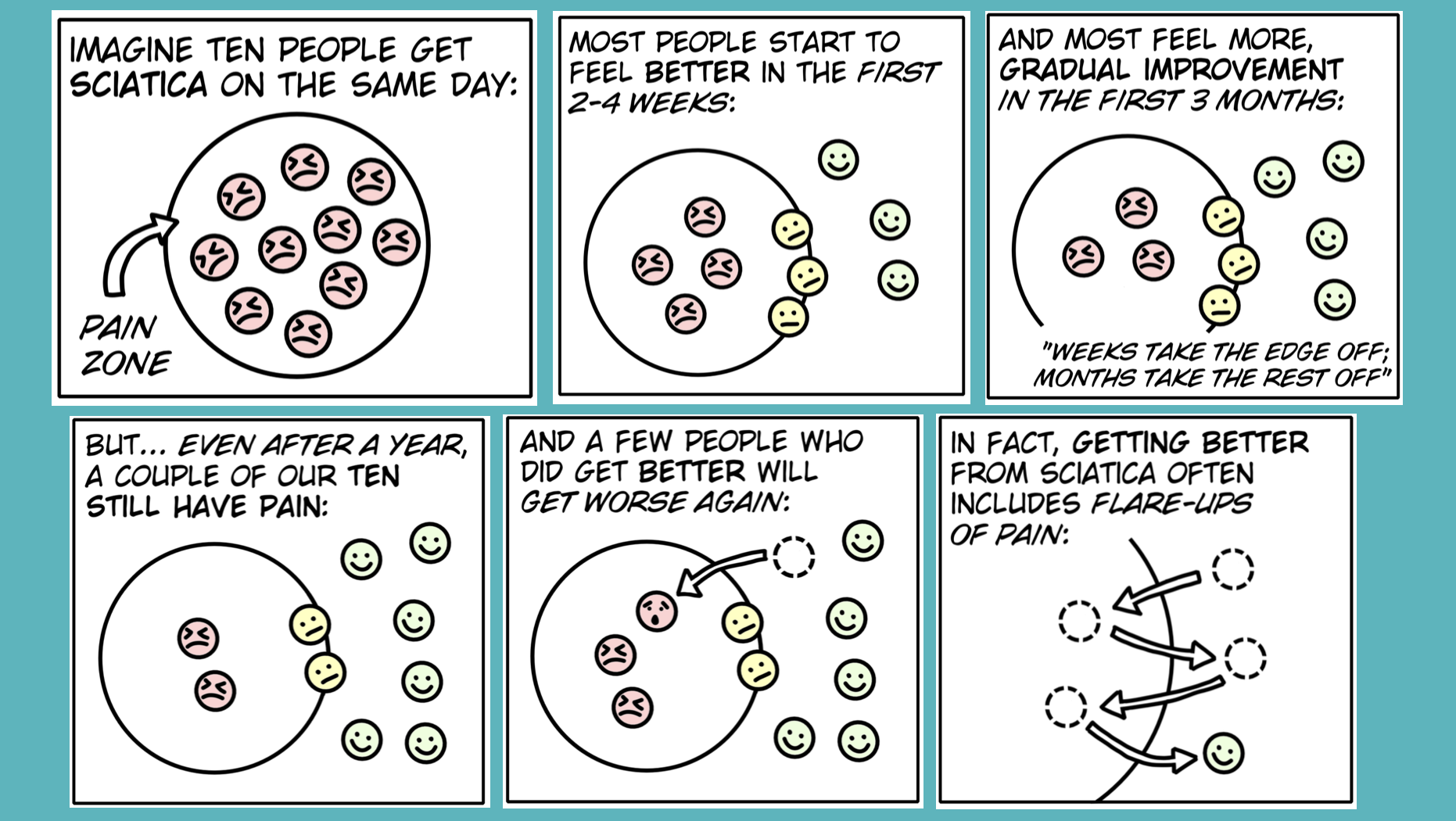
Really great info graphic for patients to read if they are suffering with symptoms. Reassuring them that things will improve and they don't have to avoid moving!
Easy to read and understand. Nice descriptions and pictures to aid for a positive reading experience.
Definitely worth while addition to your practice.
The Sciatica Guide is a great patient-facing resource. Clear, reassuring, and easy to hand straight to your patients.
Tom Jesson is my go-to guy on sciatica, and when he speaks on the topic, you listen. This is another excellent resource that makes life easier for both clinicians and patients.
Highly recommend it :)
Tom is very knowledgable, and although it was my first time visiting one of his CPDs, I believe it will not be the last. He broke down the subject in very simple pieces making it easy for those with no experience at all to understand. For myself, who has experience in the area, made it easier for me to explain to patients and for me to be able to dfiferentially diagnose better! Well done Tom and THank you
-Very clearly presented.
-Useful information on differential diagnosis, prognosis and pathology.
-Good tips on educating patients regarding this condition.
-Covered the evidence for treatment and when to refer on which was very useful.
-If there had been time maybe DGPS could have been added to differential diagnosis section.
Tom does a great job of combining general knowledge and research to provide valuable information for any Physical Therapist working with sciatica patients. On a personal level, his book (and now lecture) have helped my own management of a nasty disc herniation. The lecture provides actionable education/treatment options in the clinic immediately, and I look forward to any future content.
Thank you for a great talk, it was interesting, backed up with research, an excellent crib sheet was sent afterwards, a really helpful lecture on sciatica!
The books, the Zines and the lecture were all fantastic. Complicated research, explained simply. My confidence in, and ability to communicate disc/sciatica information has improved thanks to Tom!
A brilliant book and “must have” for any MSK clinician. Easy to read. Highly recommended.
Don’t miss out on this book! It’s easy to read and explains things really well. There’s a lot of examples that can be used with patients that are easy to understand.
Overall, a lot of great research, anatomy and plenty to learn.
I loved this book. I'm going through it a second time right now. It has in depth anatomy that is usable and written in a way that is much more interesting than a textbook!
Any health professional seeing patients with low back pain needs to read and reflect on this book. Well written, explains complex concepts simply.
Essential reading for any health professional looking after patients with this condition.
This book is a fantastic resource to learn more about radiculopathy and radicular pain. It contains so much useful information which has helped me answer patient's questions, particularly explaining why they might be experiencing symptoms not explained by the MRI findings.
This book was great for helping me understand the link between (patho)anatomy, how a patient presents, why different patients with apparently the same pathology might present differently, and in being realistic about how these patients recover. An excellent resource for therapists that goes beyond the basics of what we learn at uni.
Amazingly structured and understandable content. In my opinion should be a module in all major musculoskeletal healthcare education. It goes beyond just sciatica and it really explains neuropathic pain
I was recommended to visit Tom's blog during my osteopathy studies by my anatomy and physiology lecturer. Reading Tom's blog, his book and zines has made what 4 years of anatomy at University level has failed to do. A wonderful book for students, practitioners and patients. It is such a complex topic but somehow Tom manages to deliver it in an informative, clear and easy to read manner. The information is reliable, up to date and truly helpful for clinical practice. I am now in private practice and recommend all my patients with low back pain with or without leg pain to visit Tom's website or purchase his work. It is a game changer for informed decisions, pain science and patient and practitioner empowerment.
Concise and helps organize my framework around this often blurry topic. Essential for new grads and a great adjunct for seasoned clinicians.
A brilliant book that goes deep on sciatica and radiculopathy in an entertaining and appraochable way. A great resource for any clinicians working with patients and looking to develop a good understanding of one to the most common patient problems.
Fabulous lecture. Clinically relevant with some really useful phrases to use with patients. Excellent discussions around time lines of symptoms to help decision making.
Reading this book has provided me with a much better understanding of radiculopathy and radicular pain. It’s allowed me to have better conversations with my patients, and to better understand what we might be trying to achieve with our interventions.
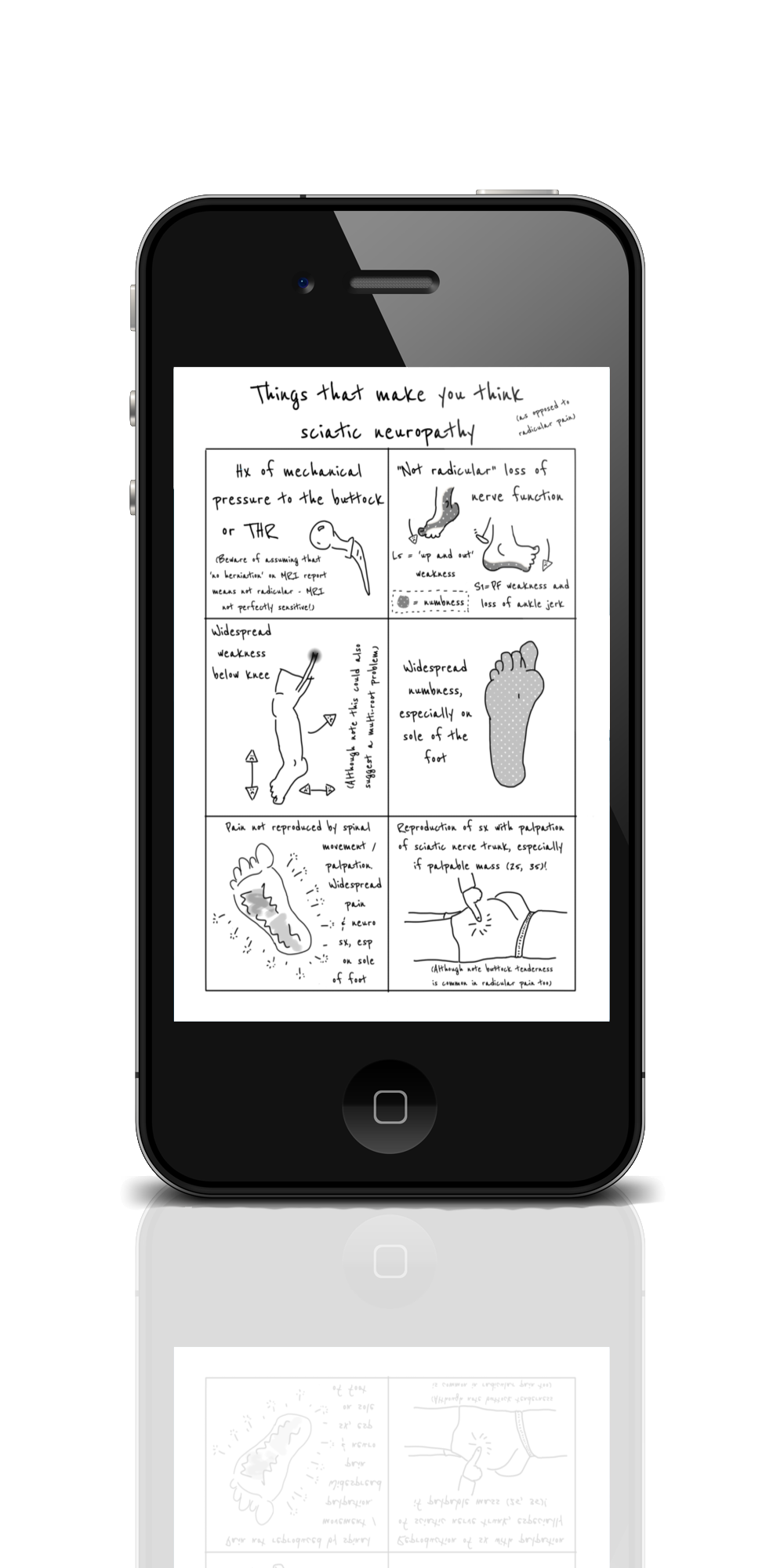
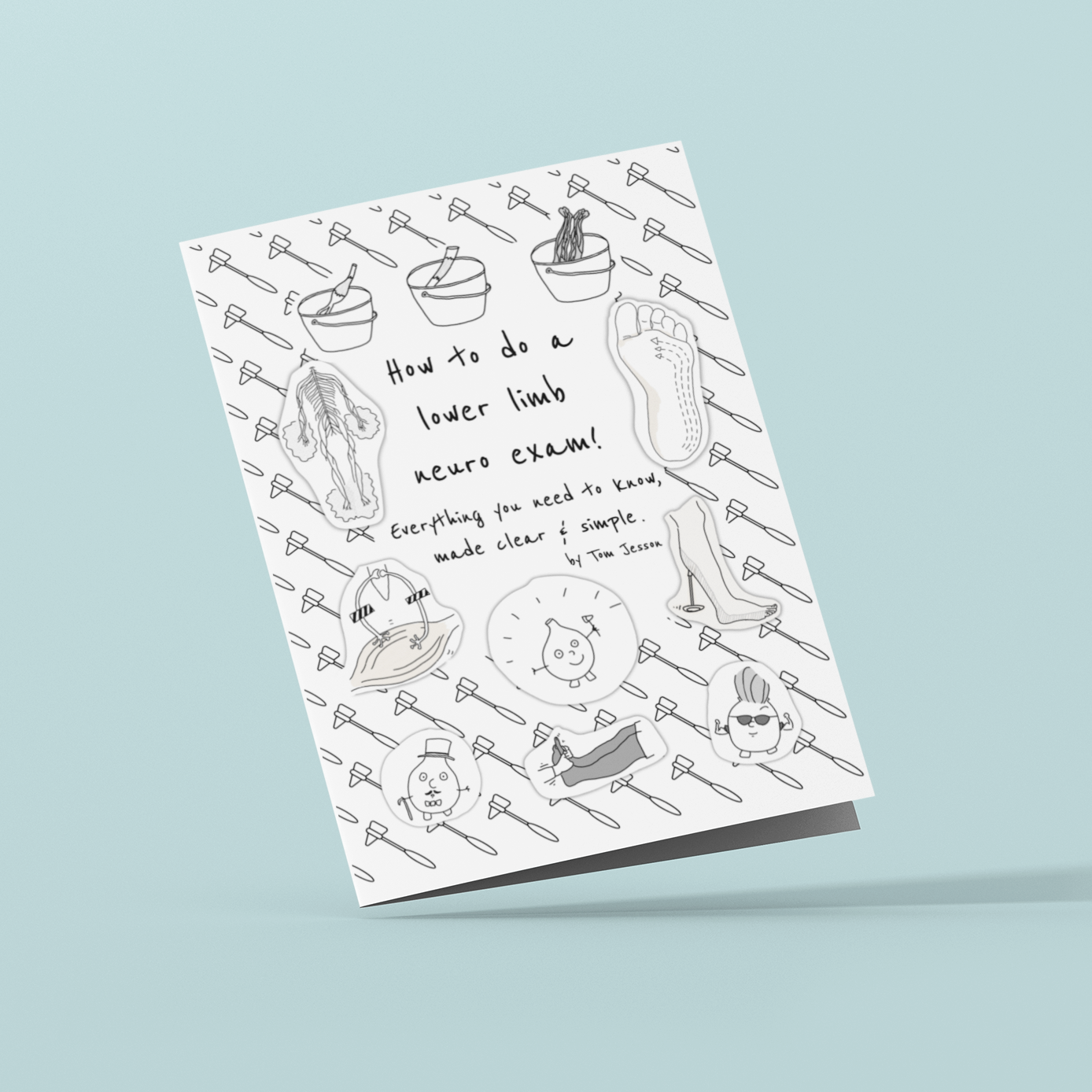
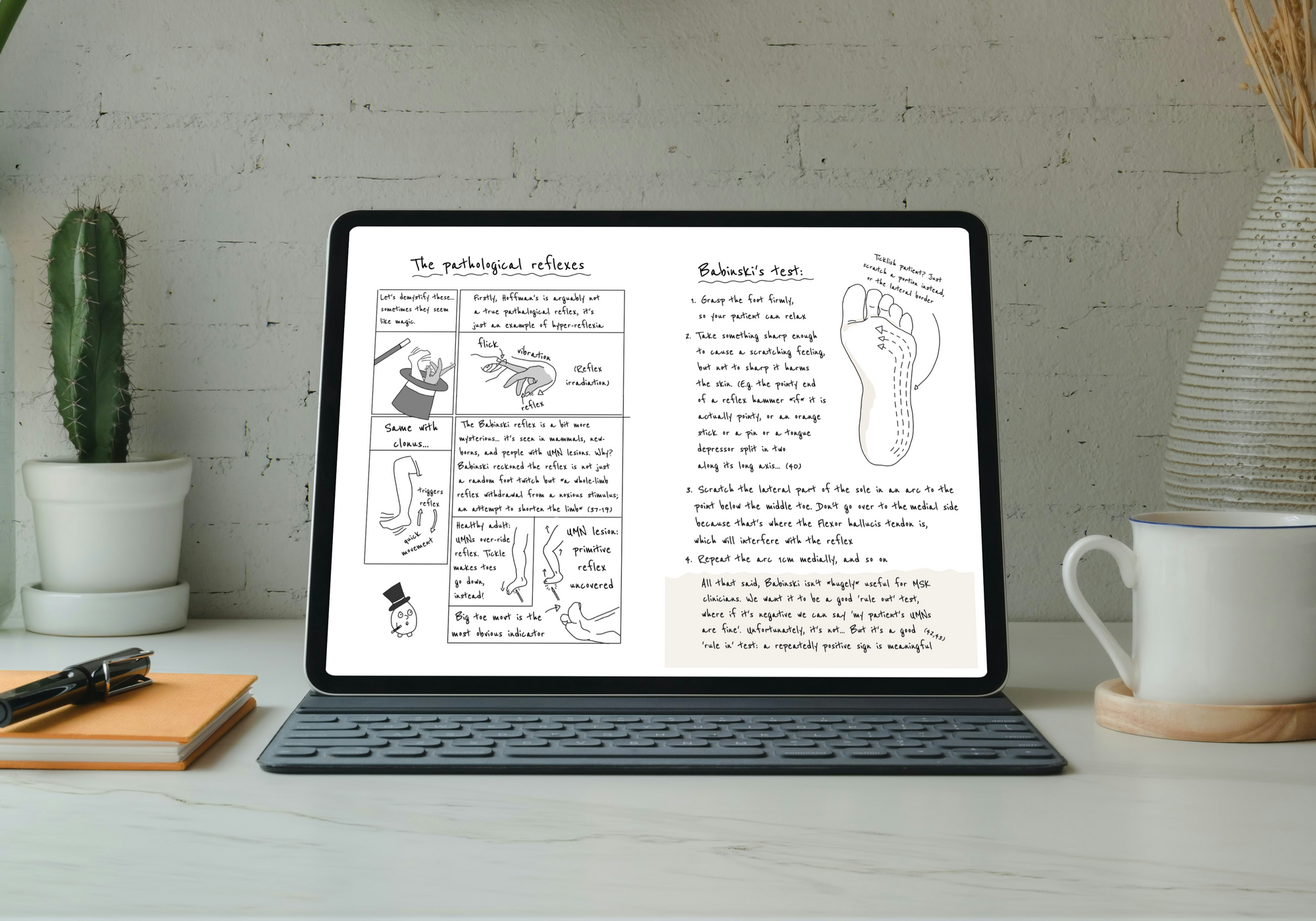
DO read! The basics of a competent neurological examination and (as importantly) how to interpret it.
Lovely stuff Tom.
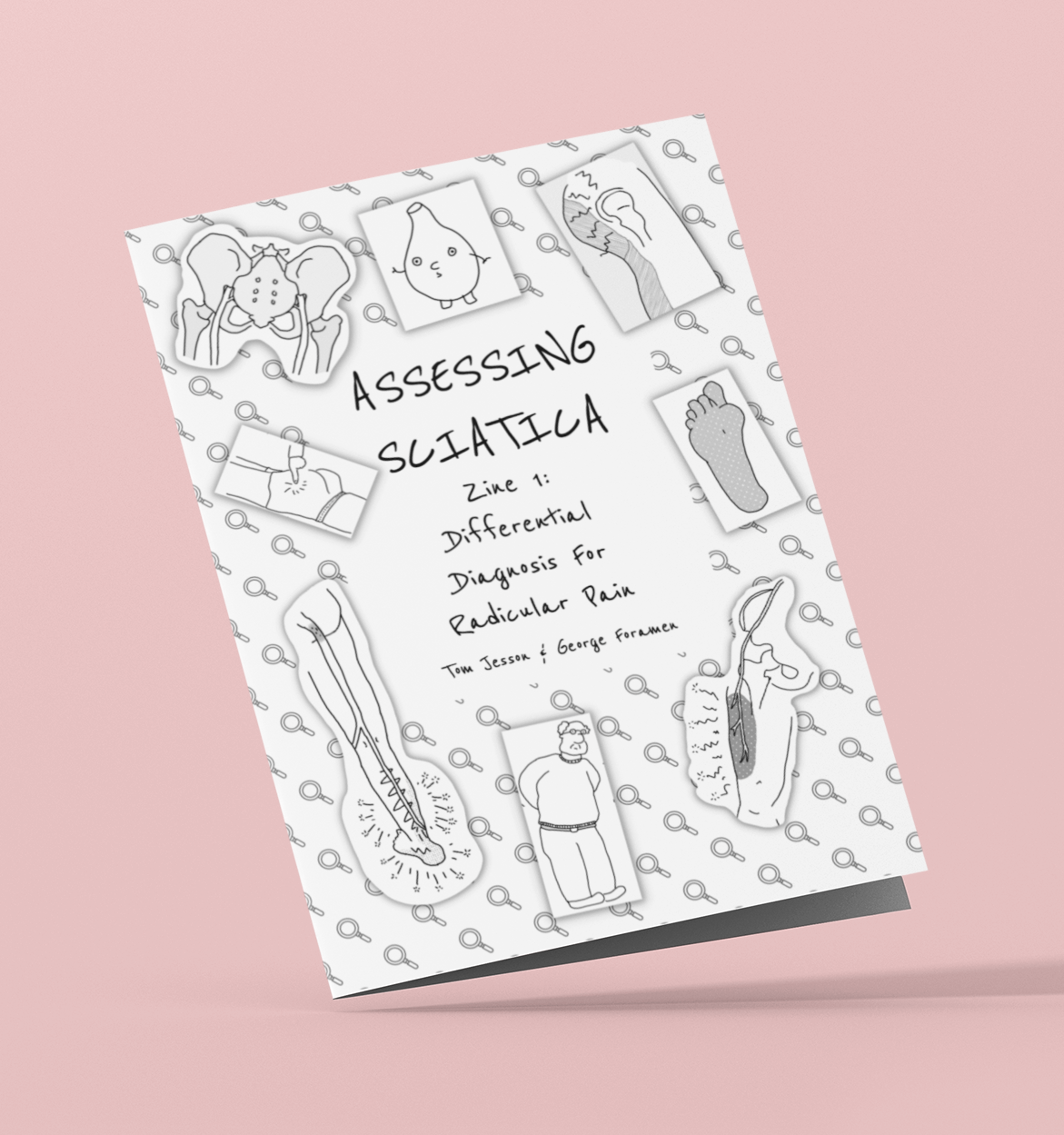
Brilliant and informative zine packed from front to cover with great info. Ideal for those starting out in their physio journey or those who just want to consolidate their knowledge and skills on the LL neuro exam. Makes sense of a complex area in a fun and understandable way . Highly recommend which I regularly do to rotating colleagues and students.
Great book. Has helped my understanding of nerve related symptoms, which in turn has improved my patient communication.